
Key points
- One Voice 27 is taking evangelism beyond church walls and into the digital spaces where millions of people spend their time.
- Generation Light Mode equips members with Bible studies, devotionals and tools to create and share Christ-centred digital content.
- The initiative challenges believers to not only post about Christ but to reflect Him in their online and offline lives.
The next person to hear the Gospel may not be sitting inside a church. They could be scrolling through WhatsApp, watching a YouTube video, reading an Instagram post or searching for answers online. This is the digital mission field that One Voice 27 is seeking to enter, using social media and digital platforms to take the message of Christ beyond church walls. At the centre of this strategy is Generation Light Mode, a digital evangelism movement and content-development tool designed to equip Adventists with resources they can use to study the Bible, create messages and share their faith online.
A New Mission Field Behind the Screen
For Steve Biko Nyagah, the digital dimension of One Voice 27 responds to the changing ways people communicate, learn and interact.
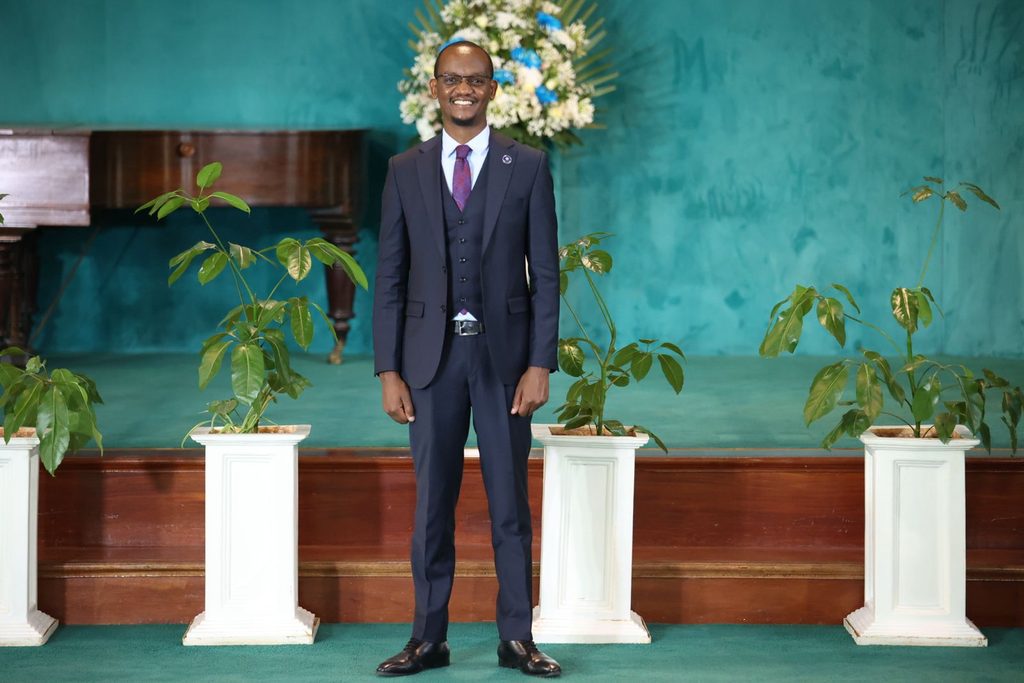
“This is a global mission initiative to evangelize in the digital platform,” Nyagah explains. “We’ve been doing different modes, different channels, but the church thought it fit to initiate digital evangelism.”
The idea is simple but potentially far-reaching: take the Gospel to people where they already are. For generations, evangelism has relied on churches, public meetings, personal visits, literature and other physical forms of outreach. Digital platforms have now added another mission field one where a single message can travel across geographical and physical boundaries within seconds.
Nyagah says One Voice 27 therefore provides an opportunity for every believer to become involved in spreading the Gospel through digital platforms. “It’s a global movement where all of us are called to evangelize and spread this through the digital platform,” he says. Pastor Immanuel Tumpes, Associate Secretary of the East Kenya Union Conference, reinforces this broader understanding of the initiative, stressing that technology should serve the mission rather than become the mission itself.
“The message is greater than the messenger,” Pr. Tumpes says.
His point is that social media, videos, websites, preaching and other communication platforms are simply instruments. At the centre must remain Jesus Christ and the Gospel.
Generation Light Mode: Equipping Digital Missionaries
The practical expression of this digital mission is Generation Light Mode, which Nyagah describes as both a movement and a tool for digital evangelism.
“Basically, it’s a digital evangelism movement and also tool,” he says.
He explains that the platform is designed to provide users with resources for both spiritual growth and digital content creation.
Users can create an account and access a range of materials, including Bible study guides and devotionals. Beyond personal study, the platform also provides opportunities to create content that can be shared across different social-media platforms.
“If you want to generate content that you can share on WhatsApp, on Twitter, on Instagram, and all social media platforms, the same are also available,” Nyagah explains.
Instead of waiting for an evangelistic campaign or a preacher to provide all the content, members can become active participants in creating and distributing messages of hope.
A Bible study can become a conversation starter. A devotional can become a WhatsApp status. A testimony can become a social-media post. An encouraging message can reach someone who may never have considered attending a church service.
The technology, therefore, is not intended to replace traditional evangelism. Rather, it gives members another avenue through which they can participate in the same mission.And the potential audience is enormous.
From Posting About Christ to Reflecting Christ
Nyagah, however, cautions that digital evangelism is not simply about filling social-media feeds with religious messages.
The deeper question, he says, is whether the person behind the post is actually living the message they are sharing.
Generation Light Mode is built around five principles that Nyagah says should guide digital engagement: live visibly, shine boldly, speak the truth with courage and compassion, work with purpose, and ignite others.
The first is visibility.
“Your visibility should be a way of keeping the faith alive, active, unashamed and unhidden,” Nyagah says.
For believers, this means being willing to speak about their faith rather than hiding it from their digital identities. A Christian does not have to turn every post into a sermon, but their online presence can still communicate values of hope, kindness, truth and faith.
The second is to shine boldly.
“When you post, you’re glowing for Christ in every post,” Nyagah says.
That could mean sharing a testimony, a Bible verse, a devotional thought or a personal experience of faith. The emphasis is not on producing perfect content but on using ordinary digital interactions to point people toward Christ.
The third principle is to speak the truth with courage and deep compassion.
The digital audience is diverse. An Adventist may encounter another Christian, a person from another faith tradition or someone who does not identify with any religion. Nyagah says this diversity requires believers to communicate with courage without losing compassion.
Digital evangelism should therefore not become a competition over who is right. It should create opportunities for meaningful conversations that lead people closer to Christ.
The fourth principle is working with purpose.
“It’s not just enough to post, but is your life a Christ life?” Nyagah asks.
The question goes beyond social media. A person cannot consistently post messages about love, forgiveness and Christian character while displaying the opposite in everyday life.
“Your offline habits should reflect Christ,” he adds.
The fifth principle is to ignite others supporting fellow believers, encouraging spiritual growth and helping others participate in the mission.
This understanding of evangelism resonates with a broader principle found in the writings of Ellen G. White: that knowledge has value when it is communicated and that believers should seek effective ways of reaching the people around them. Her counsel predates modern digital technology, but the underlying principle can be applied to today's communication environment.
For Tumpes, this is ultimately about ensuring that every available communication channel points people in the same direction.
“The goal is not simply to make the church more visible, but to make Christ more visible through the church,” he says.
Where Millions Are Already Listening
The significance of digital evangelism becomes clearer when viewed against Kenya’s growing digital audience.
According to DataReportal’s Digital 2026: Kenya report, the country had 23.4 million internet users in October 2025, representing 40.5 percent of the population. The report also recorded 18.4 million social-media user identities, equivalent to 31.8 percent of the population.
Kenya's digital audience is also relatively young. People aged 18–24 made up 14.4 percent of the population, while those aged 25–34 accounted for 15.6 percent. These age groups represent a substantial part of the population growing up and interacting in an increasingly digital environment.
Data cited by DataReportal from GWI found that Kenyan internet users aged 16 and above spent an average of 4 hours and 13 minutes per day on social media.
That means the mission field is not theoretical. Millions of people are already spending significant portions of their day online.
For the church, the question is therefore no longer whether digital platforms should be part of evangelism, but how intentionally they should be used.
A post may be seen by hundreds. A video can travel to thousands. A simple message can reach someone sitting alone with questions about life, faith, suffering or purpose.
The first digital encounter may lead to a conversation. The conversation may lead to a Bible study. The Bible study may lead to discipleship. And discipleship may eventually lead someone into a deeper relationship with Christ and the church.
That is the opportunity One Voice 27 places before believers.
The mission has not changed. The message has not changed. Jesus remains at the centre.
What has changed is the mission field and increasingly, the mission field is right there behind the screen.
By Jeremick Joe

One Voice 27 Takes the Gospel Online: Turning Every Screen into a Mission Field
Key points The next person to hear the Gospel may not be sitting inside a church. They could be scrolling through WhatsApp, watching a YouTube video, reading an Instagram post or searching for answers online. This is the digital mission field that One Voice 27 is seeking to enter, using social media and digital platforms…
Read More
EAST KENYA UNION CONFERENCE AND NAIROBI CENTRAL SDA CHURCH LAUNCH ONEVOICE27
By Jeremick Joe Key points Hundreds of Adventurers and Pathfinders in official uniforms marched into a packed Nairobi Central Church as the church, joined by East Kenya Union Conference (EKUC) launched One Voice 27, a campaign designed to mobilise every church member for mission through September 2027. Carrying flags marked “One Voice 27 Mission for…
Read More
EKUC Annex Office Officially Inaugurated to Accommodate Expanding Ministries
On Monday, 17th August 2026, the East Kenya Union Conference (EKUC) officially inaugurated its newly renovated Annex office, strategically located within the Central Kenya Conference (CKC) grounds. The expansion was necessitated by a growing need for more office space to accommodate EKUC’s expanding departmental leadership.The dedication ceremony was led by EKUC President Pr. Joel Okindo,…
Read MoreA CALL TO MINISTRY AND MISSION – A REFLECTION
Embracing the 2026 – 2030 Vision with EKUC President Pr. Dr. Joel Okindo “Hapa ni kazi tu na kazi ni uinjilisti (Here, it is strictly work, and the work is evangelism). Any other noise is irrelevant. All the noise we want to hear is about mission.” – Pr. Joel Okindo, EKUC President On June 17,…
Read More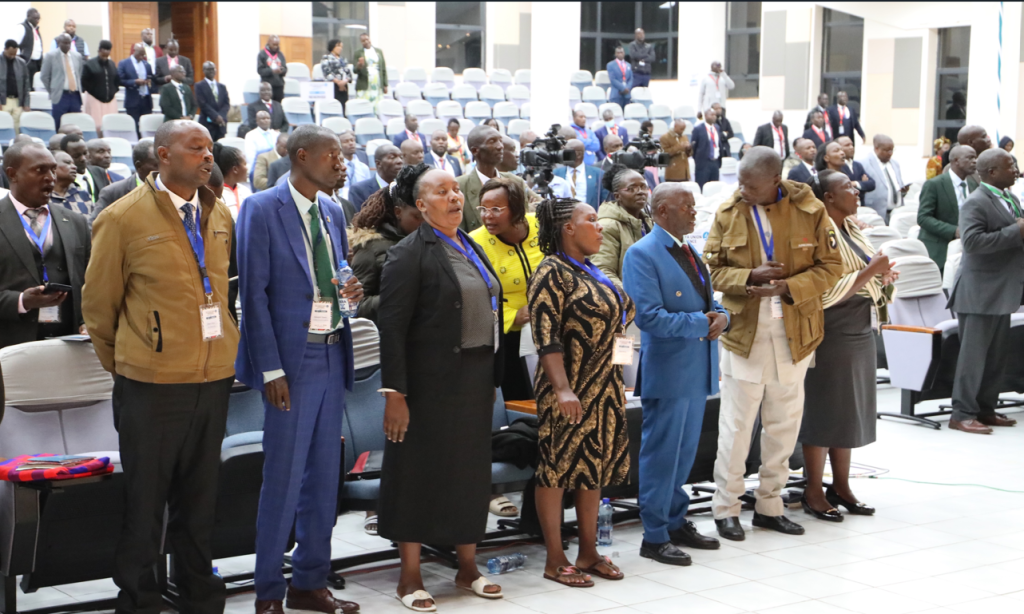
A Call to Repentance and Restoration
Prof. Osei-Bonsu’s Stirring Devotion at EKUC’s Special Constituency Meeting By Abigael Wambua Professor Robert Osei-Bonsu, A General Vice-President to the General Conference President was one of the leaders who attended the East kenya Union Conference Special Constituency Meeting conducted at the Adventist University of Africa. As a leader, Prof. Osei Bonsu was given achnce to…
Read More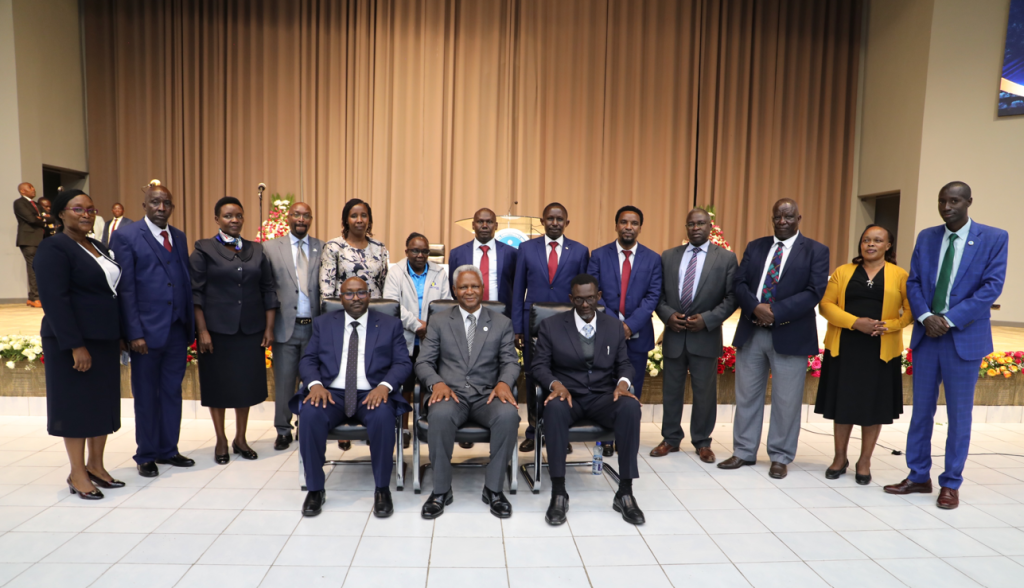
BY GOD’S GRACE, WE WILL OVERCOME
Newly Elected EKUC President Pastor Dr. Joel Okindo Delivers Powerful Acceptance Speech Focused on Healing, Hope and Strategic Growth by 2030 Following his official election at the East Kenya Union Conference (EKUC) Special Constituency Meeting on June 11, 2026, the newly appointed President, Pastor Dr. Joel Okindo, delivered a deeply moving and Christ-centered acceptance speech.…
Read More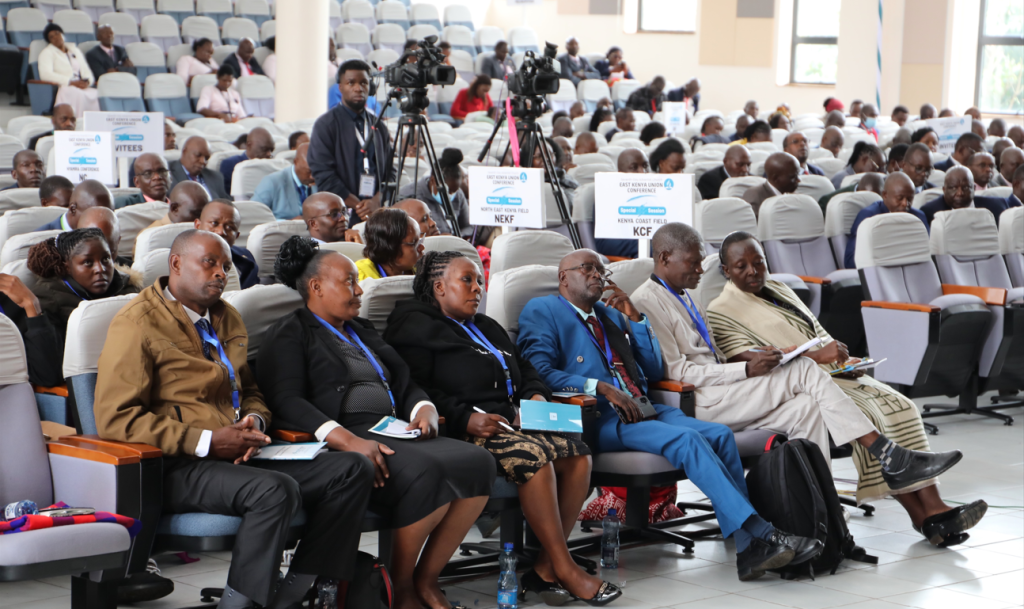
EKUC Special Constituency Meeting
RONGAI, KENYA – The East Kenya Union Conference (EKUC) officially commenced its Special Constituency Meeting on June 10, 2026, at the Adventist University of Africa (AUA) auditorium, located at the East-Central Africa Division (ECD) Headquarters. The three-day Special Constituency Meeting brings together close to four hundred (400) delegates alongside key global, divisional, and union church…
Read More
Your Words Wield Much Power
Our words carry divine power — to build or to destroy, to bless or to curse. In “Your Words Wield Much Power,” Pr. Paul Mwangi reminds us that every word we speak shapes our destiny. Drawing from Proverbs and the lives of Joseph, David, and Daniel, he shows how gracious, faith-filled speech brings favor and…
Read More